
When parents consider choosing a childcare centre Sydney, it is natural to notice the play equipment, bedrooms, outdoor area and menu.
Safety is harder to judge.
A locked gate tells you something, but not enough. Modern childcare safety NSW also involves educator practices, supervision, staff screening, digital photographs, personal phones, incident procedures and the way a service responds when something goes wrong.
Several national and NSW requirements were strengthened during 2025 and 2026. For families choosing childcare for 2027, there are now more useful questions to ask and more information that can be checked independently.
What Changed in Childcare Safety NSW During 2026?
Child safety became more explicit within Australia's National Quality Framework.
From 1 January 2026, the National Quality Standard placed a stronger child-safety focus within Quality Areas 2 and 7. Further national requirements commenced on 27 February 2026, including stronger rules around digital devices, child-safety training and the responsibility of people involved in education and care services to make children's safety, rights and best interests a paramount consideration.
NSW has introduced additional reforms aimed at increasing regulatory oversight and transparency for families.
For parents, however, regulations become most useful when you know what they should look like in everyday practice.
1. Look Beyond Whether the Gate Is Locked
Physical security matters, but supervision is much broader.
During a childcare tour, watch what happens while children move between spaces. Can educators see the areas children are using? What happens when one child needs the bathroom, another needs comfort and several others are playing outside?
Good supervision is active.
Educators should know where children are, recognise changing risks and position themselves so they can respond rather than simply being present somewhere in the room.
The National Quality Standard childcare principle considers children's health and safety as well as staffing arrangements, relationships, governance and the physical environment when services are assessed.
A useful question is therefore:
“How do you manage supervision when children move between indoor and outdoor areas?”
The answer can tell you considerably more than asking whether the centre is “safe”.
2. Ask What Happens to Educators' Personal Phones
This is an area where childcare practice has changed substantially.
From 27 February 2026, national requirements restricted the use of personal digital devices in education and care services. Personal devices include equipment capable of capturing, storing or transmitting images, such as phones, cameras, tablets, smart watches and some other connected devices.
There are limited authorised exceptions, but personal devices generally cannot simply be used around children as they once might have been.
Parents can ask:
“What is your policy on educators carrying personal phones or smart devices while working with children?”
A centre should be able to explain its process clearly rather than treating the question as unusual.
3. Find Out How Your Child's Photos Are Taken and Stored
Parents enjoy receiving photos from childcare. Seeing a painting project, garden activity or afternoon play session helps families feel connected to a child's day.
But the convenience of digital updates also creates a responsibility to protect children's privacy.
Since September 2025, early childhood services have been required to have policies covering the safe use of digital technologies and online environments. These policies address matters including taking, storing, using and destroying images and videos, parent authorisation and the use of service-issued digital devices.
When joining a centre, ask:
Which devices are used to photograph children?
Where are images stored?
Who can access them?
How is parent permission managed?
What happens to images when they are no longer required?
These are no longer overly cautious questions. They are part of modern child safety.
Jane's Place, for example, uses the Xplor Home app to help families access information and documentation relating to their child's day.
4. Check the Centre's Official Quality Rating
A polished website should never be your only source of information.
Approved Australian early childhood education and care services are assessed against the National Quality Standard childcare norms, which contain seven quality areas covering:
educational program and practice
children's health and childcare safety standards Australia
physical environment
staffing arrangements
relationships with children
collaborative partnerships with families and communities
governance and leadership
Services receive an official rating following assessment by their state or territory regulatory authority. Ratings can be viewed through government-supported services such as StartingBlocks.
This gives parents an independent reference point when comparing safe childcare centres.
Do not look only at the overall label. Ask when the assessment occurred and discuss any questions you have with the service.
5. Pay Attention to How Educators Speak to Children
Not every sign of quality appears in a policy document.
During a tour, stop talking for a moment and watch.
Does an educator crouch down when a toddler is upset? Is a child given time to finish what they are saying? Are instructions calm and age-appropriate? Does an educator know what the children are interested in?
Relationships with children are one of the seven National Quality Standard areas for good reason. Responsive and respectful relationships help children develop security and a sense of belonging.
A beautiful room cannot compensate for consistently detached interactions.
For younger children in particular, the adults in the room are a major part of the environment.
6. Ask How Staff and Volunteers Are Prepared for Child Safety
Another major 2026 reform expanded child-safety requirements around people working within early childhood services.
National changes introduced mandatory child-safety training requirements and strengthened arrangements concerning child protection and worker oversight. A National Early Childhood Worker Register also commenced from 27 February 2026 to improve regulatory visibility of people working across the sector.
Parents do not need to interrogate individual educators about their qualifications.
Instead, ask management:
“What child-safety training does your team complete, and how do you keep that training current?”
A professional service should be comfortable explaining how staff responsibilities are managed.
7. Notice Whether the Centre Welcomes Parent Questions
Transparency itself is informative.
If you ask about accidents, photographs, supervision, allergies or policies, you should receive a clear answer.
A quality centre does not expect parents to simply hand over their child and trust everything without explanation. Families are partners in early education.
The National Quality Standard specifically recognises collaborative relationships with families as an important part of quality care.
At Jane's Place, family involvement forms part of the educational approach. Families are encouraged to share information about children's interests, experiences, cultural practices and individual needs so educators can incorporate them into the program.
That two-way communication becomes particularly important when a child cannot yet explain everything that happened during their day.
What Should You Take Away From a Childcare Tour?
Do not try to inspect a centre like a regulator.
Instead, leave with answers to a few practical questions:
Who will know my child well?
How are children supervised?
What happens to photos and videos?
Can I see the service's quality information?
How does the centre communicate incidents or concerns?
How do educators respond when children are upset?
Do I feel comfortable asking difficult questions?
Facilities matter. Programs matter. Meals and opening hours matter too.
But the everyday culture behind those things matters even more.
A Safe Place Should Also Feel Like a Place to Belong
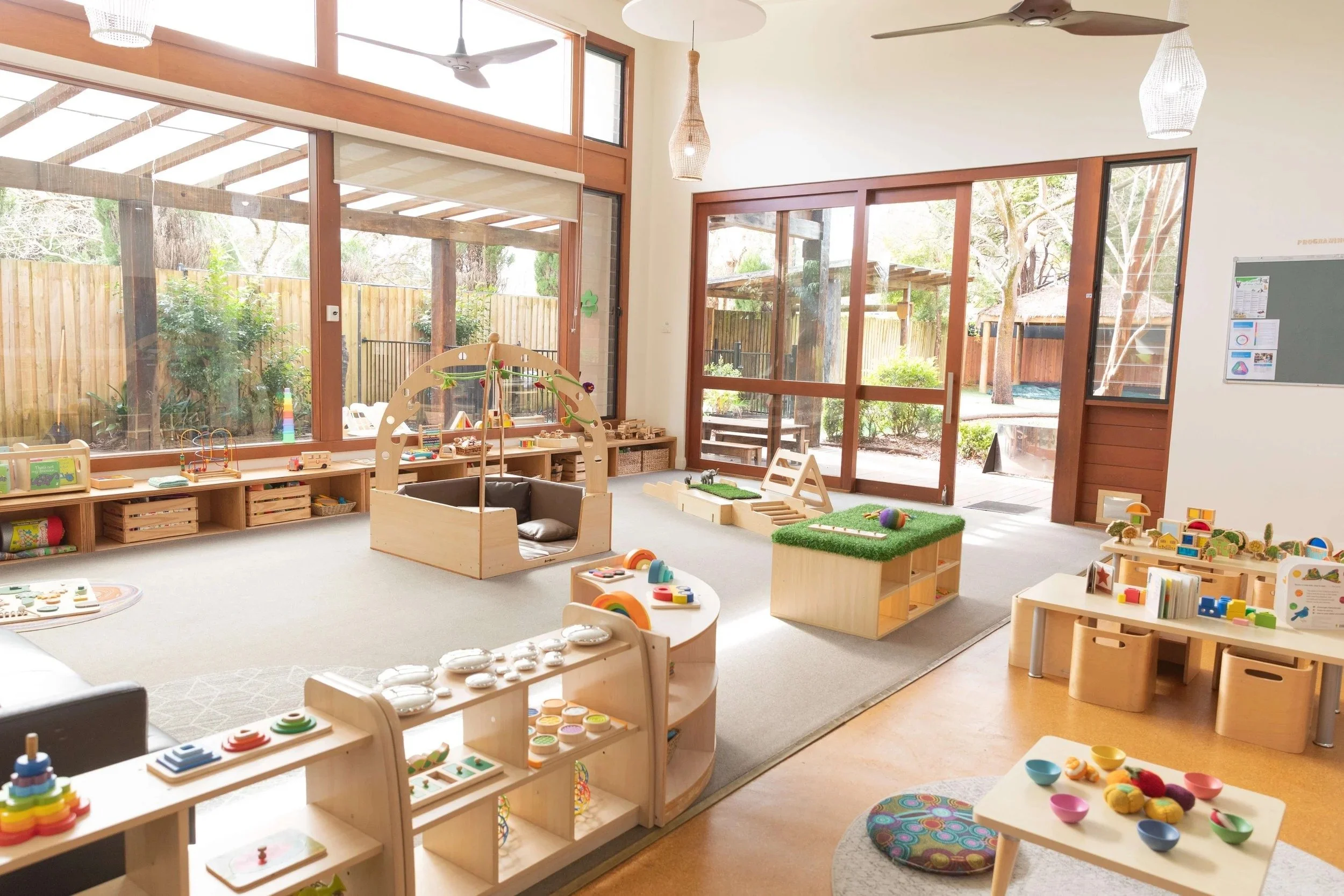
At Jane's Place ELC, we believe children learn best when they feel secure, recognised and comfortable in their surroundings.
Our approach combines a nurturing, home-like environment with interest-based early learning, close communication with families and spaces where children can explore indoors and outdoors. Safety is not separate from learning. It is what allows children to become confident enough to play, communicate, experiment and form relationships.
Parents considering an early learning centre in Sydney are welcome to visit Jane's Place, meet the educators and ask the questions that matter to their family.
Choosing childcare should never require blind trust. The right service should give you reasons to feel confident.
